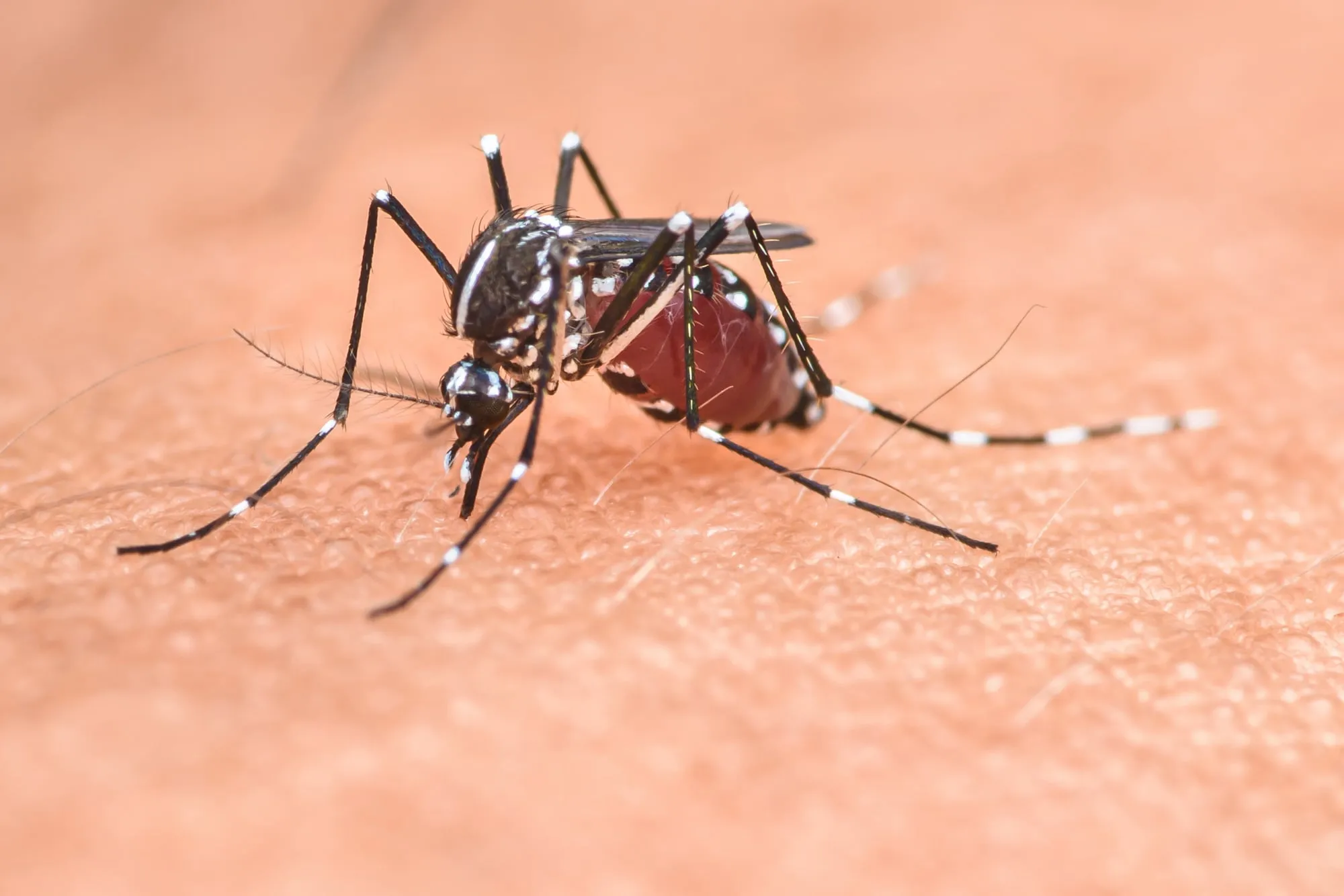
Warm evenings change how a deck feels once the sun drops. Mosquitoes concentrate beside railings where guests stand still long enough to get bitten. Saucers, gutters, and shaded corners breed more nearby while you set the table.
Hampton Pest Management serves Suffolk County across the East End, from Southampton to Montauk. This article covers why dusk bites spike on decks, what you can fix before dinner, and when professional tick and mosquito control or BioBelt mosquito control fits.
Why the deck at dusk differs from the lawn at noon
Mosquitoes are weak fliers. Still air under eaves, beside railings, and in the lee of hedges lets them reach ankles and wrists while guests talk without moving much. Center lawn may feel fine at noon when breezes keep adults down. The same property can feel unbearable at the table after lights go on.
Walk the deck perimeter once at dusk with a phone flashlight. Note saucers, clogged scuppers, tarps, and low spots where irrigation pools after the system runs. Mosquito dusk on the deck explains that shift. Standing water and mosquitoes lists breeding spots that survive busy host calendars.
Standing water within twenty feet of the table
Birdbaths, plant saucers, wheelbarrows, and forgotten buckets hold enough water for mosquito larvae within a few days. Gutters that drain onto the deck or into foundation beds create repeat puddles every rain. Pool cover pumps and drip lines that weep overnight feed the same cycle.
Empty saucers after rain. Flush scuppers and downspout extensions. Fix irrigation heads that throw into hardscape instead of turf. One deep correction beats citronella candles alone when breeding sites sit ten feet from the railing.
Properties in East Hampton and Sag Harbor often mix ocean breeze with sheltered deck corners that stay still. Windy nights on open Westhampton Beach decks may feel fine while a leeward planter box still breeds adults beside the grill.
Ticks and full-season programs on the same calendar
Guests who cross lawn edges to reach the deck can pick up ticks before mosquitoes find them at the table. Read late season tick habitat along fence lines when dog paths and dinner paths share one corridor.
The spring guide to tick and mosquito control explains combined programs from April through November. Keep shoes on for dusk grass when wood line time sits next to porch time.
A single spray the afternoon of a party rarely matches what a full season program does across breeding cycles. BioBelt mosquito control targets resting zones where adults gather before they reach the deck. Plan service with lead time when your guest list is fixed.
Cultural habits and keeping species separate
Wipe outdoor kitchen grease trays on the same evenings mosquitoes hit the deck. Ant scouts follow moisture lines toward sliders while you notice weak fliers at the railing. Ant control belongs when grease trains lines toward the house.
Paper wasps build under eaves where guests eat every weekend. Wasps and hornets when to call covers when a comb blocks the path to the grill. Do not blame every bump on mosquitoes alone.
When several outdoor issues compete, run the seacoast pest priority quiz or outdoor rhythm from opening through peak traffic before you book the wrong first visit.
Checklist and when to call
Walk the deck and ten feet beyond at dusk. Empty saucers and fix obvious puddles. Clean gutters that drain toward seating areas. Check lawn edges guests cross to reach the table and plan tick checks for kids and dogs after grass time.
Call when deck bites persist after you removed obvious standing water, when pets carry ticks indoors after short grass time, or when wasp nests block paths to the outdoor kitchen.
Hampton Pest Management offers a free property evaluation for East End properties where dusk on the deck is the main outdoor season problem. Share photos through contact when bites spike sharply in one week after rain.