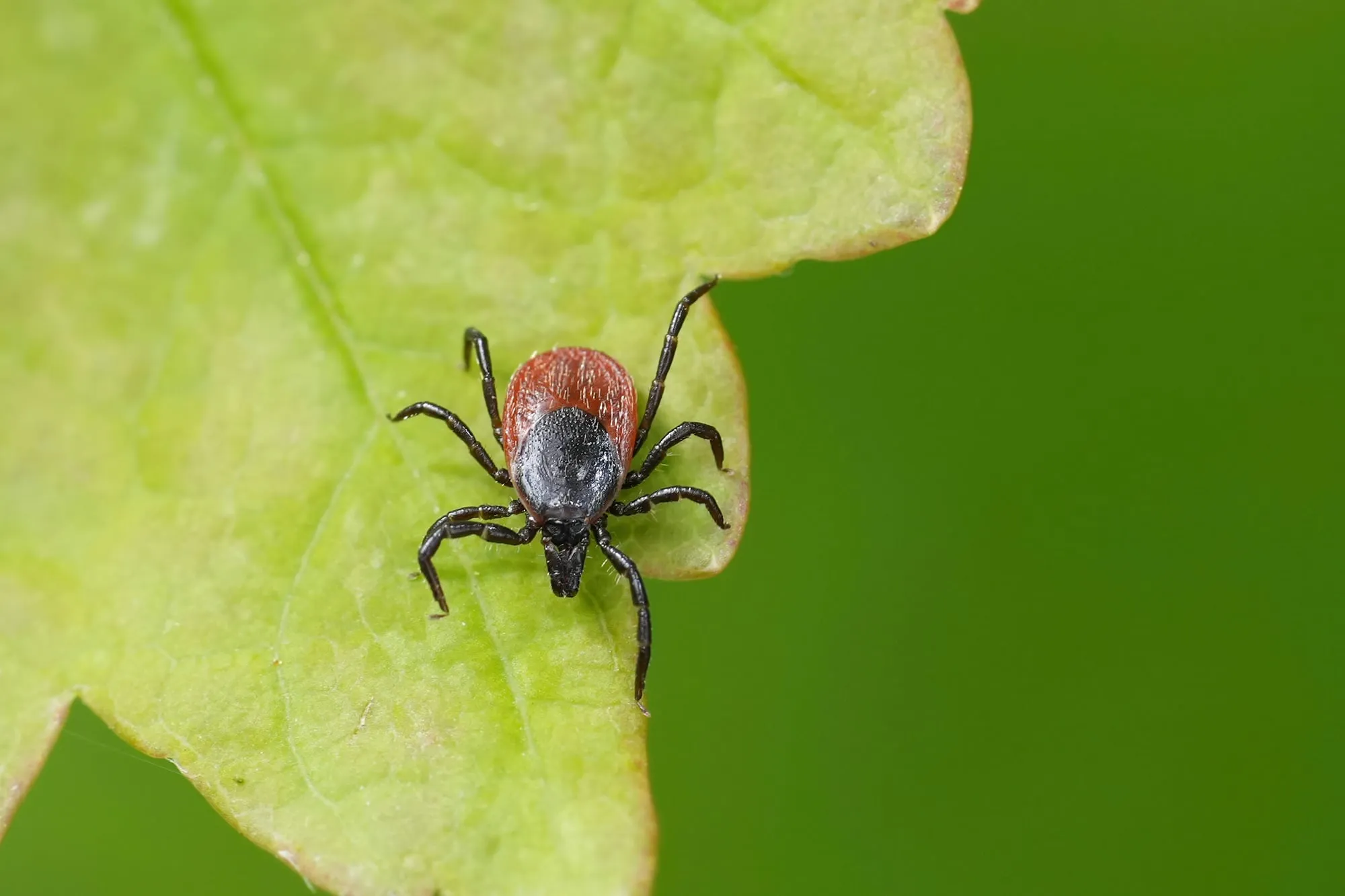
Pool gates and garage corners see traffic all day on East End properties in summer. Ticks use lawn edges beside those paths. Ants follow scent lines toward pet food, sweet recycling residue, and damp sills near the door everyone uses with wet feet. Both problems intensify when guest weeks compress more movement into the same narrow bands.
Hampton Pest Management serves Suffolk County from Southampton to Amagansett. This article focuses on the gate path and garage corner because that is where families, dogs, and delivery drivers repeat the same routes until the turf wears thin.
Why the pool gate path matters for ticks
The strip from the house to the pool gate is often the most walked lawn edge on the property. Kids cut corners. Dogs loop the same line at dawn. Guests carry towels across grass that looked fine from the kitchen at noon.
Ticks wait on grass tips where mowed turf meets taller vegetation and hedge backs. A worn lane holds moisture and shade. Nymphs attach before anyone notices at the pool.
Mow gate paths and fence strips before guest weeks, not after the first tick check fails. Read late season tick habitat along fence lines when daily dog loops and pool time share one calendar. The Memorial guest week tick checklist fits when play equipment lands beside hedges.
Alternate dog routes for one week before a big gathering. Flag worn lanes on a sketch so whoever mows raises height on stressed bands instead of scalping for photos.
Garage corners: ants, moisture, and stored food
Garage doors near pool gates stay open all day in summer. Ants follow pet food bags, recycling with sweet residue, and drip lines from beach gear rinsed beside the door.
Store pet food in sealed bins. Rinse recycling lids before they sit in the garage all week. Move stored kayaks off the edge strip midweek so sun hits soil where ants and ticks both find cover.
If you see frass on sills above the garage man door, read carpenter ant frass at window sills before you assume a simple sugar ant line. Ant control routes carpenter scenarios with moisture searches.
Guest compression and travel weeks
Delivery drivers, camp drop-offs, and luggage carts compress the same band beside gates every season. That compression kills grass, exposes soil, and creates a cool corridor pests favor when traffic doubles.
Move play equipment off the hedge strip for a day so sun hits litter and soil underneath. Deer repellent and landscape edges matters when chewed tips along the gate hedge greet guests before bites do.
Pool houses beside the gate may hold rodent signs when cushions return for the season. Signs of mice and rats lists evidence to photograph. Wasps and hornets when to call covers combs under gate posts that block daily access.
Still air beside pool fences concentrates mosquitoes while kids wait to enter. Empty standing water before guest weeks. Standing water and mosquitoes lists breeding spots that survive busy calendars.
If you split time between city and East End weeks, pair this read with closing your second home and opening your second home on the travel cycle.
Checklist and when to call
Mow the pool gate path before guest or camp weeks. Store pet food and recycling properly in the garage. Empty saucers beside the gate. Photograph worn turf lanes and any rodent signs in pool houses. Plan tick checks for kids and dogs after grass time between house and pool.
Confirm tick and mosquito program timing aligns with your guest calendar. When several issues compete, run the seacoast pest priority quiz.
Call when pets carry ticks indoors nightly from the gate path, when ant lines persist after you removed obvious food sources, or when wasp nests block daily pool access.
Hampton Pest Management offers a free property evaluation when the pool gate corridor and garage corner need a clear plan before the next compressed guest week. Share photos through contact with gate habits and dog routes noted.