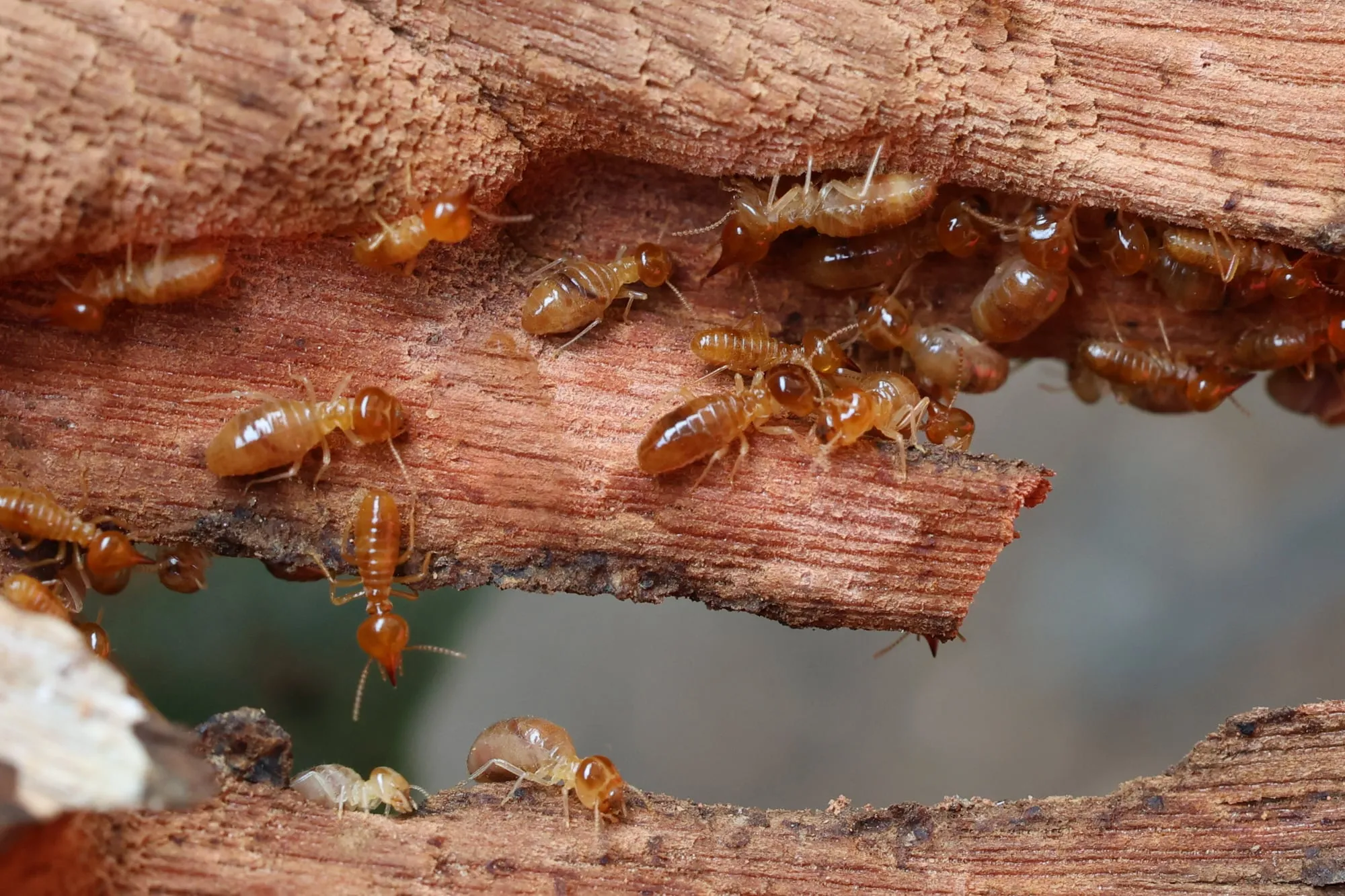
Warm rain after a dry spell often brings winged termites indoors on Long Island, especially when guest houses open windows and turn on lights. Swarmers at interior sills or basement sliders are often mistaken for flying ants by owners who just drove in from the city.
Hampton Pest Management pairs termite control with moisture and access notes. One indoor swarm is a timing clue, not proof the whole structure failed overnight.
Sweep wings into a labeled bag with the room name and date. Inspectors start with that pile even when live insects are already gone.
What warm rain changes underground
Soil moisture and temperature align after soaking rain on mild days. Colonies send swarmers toward lighted doorways and windows.
Basements with slab moisture, pony walls, and old sill plates see swarmers at thresholds first.
Outdoor swarms at stumps matter too. Tell us if wings piled on a pool house sill and on mulch against the foundation the same afternoon.
Telling swarmers from ant swarmers
Termite alates have straight antennae, broad waists, and equal wing length at a glance. Ant swarmers show elbowed antennae and pinched waists.
Shed wings on window sills without live insects still matter. Save samples on tape for the inspection file.
Read flying ants versus termites before you schedule the wrong treatment crew.
Indoor piles versus outdoor noise
Indoor wings strongly suggest a colony connection to the building, not only yard trees. Where wings pile up shows where inspectors usually start.
A single dead swarm in a unused wing may track with historic damage and moisture that returned after a guest season leak.
Vacuuming before photos deletes the evidence technicians need. Capture images first, then clean.
Moisture partners on the South Fork
Crawl spaces, below grade doors, and rim joists beside outdoor showers stay damp on East End blocks with high water tables.
Irrigation against foundations and clogged gutters extend the damp zone termites already favor.
Termite risk is easier to manage when moisture stays visible on the same list as treatment options.
Inspection scope we recommend
Inspection should cover swarm room walls, adjoining sill lines, accessible basement or crawl framing, and exterior foundation laps.
We document mud tubes, hollow sounding wood, and prior treatment stickers before recommending liquid, bait, or monitoring plans.
Real estate transfers and renovation timelines belong in the note. Contractors opening walls change the priority list.
Treatment timing and guest calendars
Tell us when guests occupy bedrooms near swarm sites. Some products need quiet access along foundation or in crawl spaces.
Swarmers die quickly indoors. The colony does not. Schedule inspection before you decide the event was harmless.
Use contact with wing photos, rain date, and town. We will not promise instant eradication without inspection findings.
Long view after the swarm weekend
Monitoring points should stay mapped year to year on second homes that sit empty between visits.
Carpenter repairs for rotted sill plates belong beside treatment, not years later when framing softens further.
Hampton Pest Management serves Suffolk County properties where warm rain and indoor wings get a thorough inspection before guest week resumes.
Pool houses and guest cottages
Detached structures with their own sills see swarmers while the main house looks clean. Photograph wings in every building guests sleep in.
Pool equipment rooms with slab moisture can host colonies that release toward interior lights on the same warm rain night as the main basement.
Include cottage access on the inspection note even when the complaint started in the primary residence.
Guest wings that stay closed until July may release swarmers at first heat-up while owners assume the problem is only in the historic main block.
Renovation dust and hidden sill plates
Addition work often buries old sill plates behind new insulation. Swarmers at a new slider may map to framing opened during construction.
Tell us if painters capped weep areas or if landscapers raised grade against foundations this season. Both change moisture at sill lines.
Termite inspection before closing walls in a renovation is cheaper than swarm panic during the first holiday party in the new wing.
Older Southampton cottages with dirt crawl entries see the same swarm timing as modern slabs when warm rain saturates bare soil under the house.