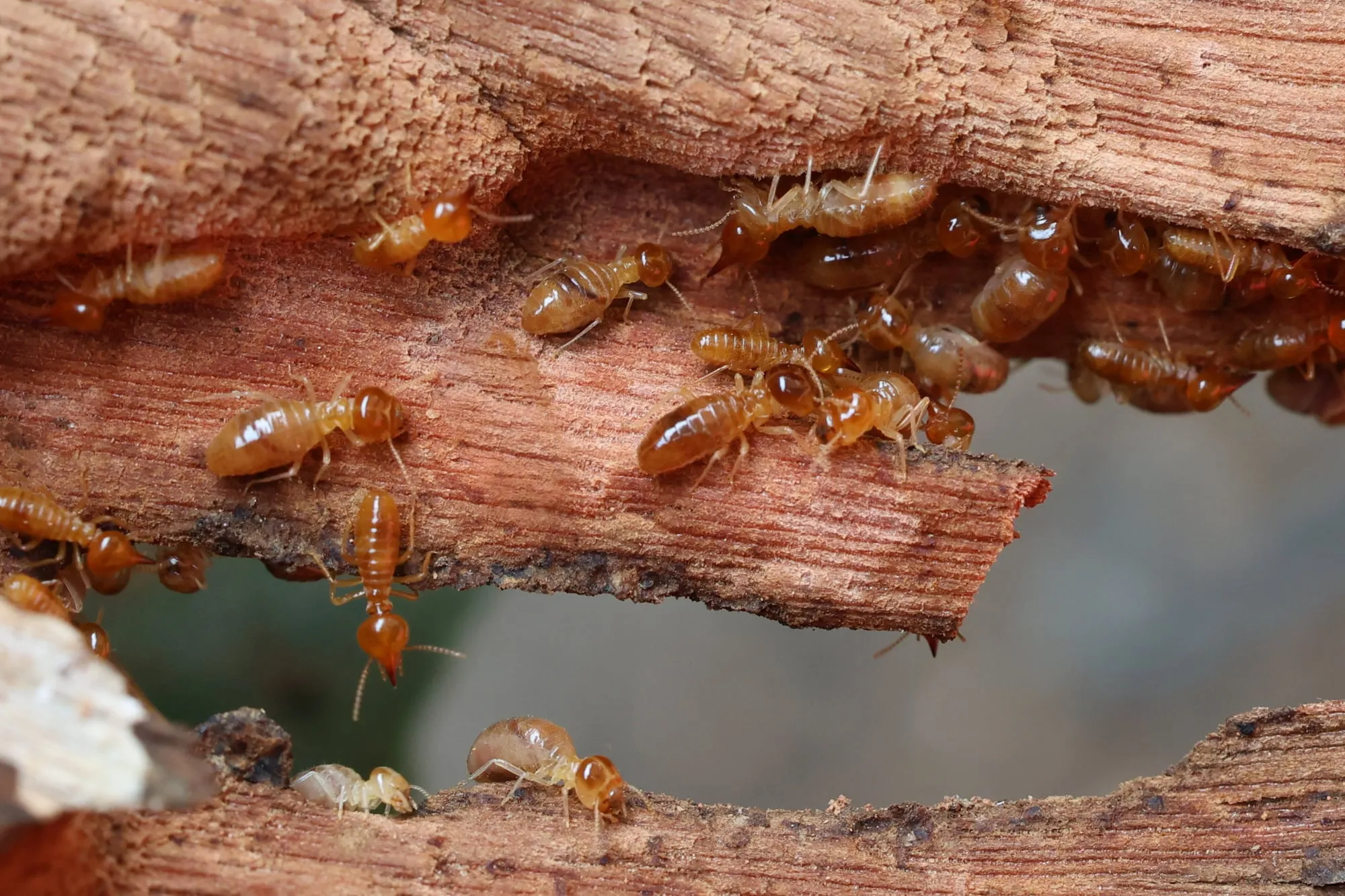
Spring on the South Fork and North Fork means open windows, time in the yard, and the return of insects. Among the first surprises many homeowners notice are swarms of winged insects near doors, windows, or light fixtures. Some are flying ants. Some are termites. They look similar enough to cause real worry, but telling them apart is straightforward once you know what to check.
Proper identification matters because treatment is completely different for ants and termites. If you are unsure what you are seeing, take clear photos before anything flies away or gets vacuumed up. That helps a technician confirm the species on site.
Flying ants vs. flying termites: three quick checks
Both ants and termites send out winged reproductives (often called swarmers) to start new colonies. On Long Island, carpenter ants are the ant species most often confused with termites because they are large and winged when they swarm.
You do not need a microscope. Look at three features:
1. Antennae
- Termites: straight, beaded antennae
- Ants: elbowed antennae with a noticeable bend
2. Wings
- Termites: two pairs of wings, both about the same length
- Ants: front wings longer than the back wings; wings may look uneven when folded
3. Waist and body shape
- Termites: broad, straight body with no pinched waist
- Ants: narrow waist between the thorax and abdomen
Black or dark brown color does not settle the question by itself. Use the three traits above whether the insect is light or dark.
Where and when you might see a swarm
Flying ants often appear on warm, humid days in spring or early summer. You might see them trailing from a wall void, window frame, or tree outdoors. A few indoors does not always mean a nest inside the house, but repeat sightings in the same spot deserve a closer look.
Termite swarmers also favor warm, damp conditions. Indoors, they sometimes emerge near structural wood, sill plates, or basement areas where moisture collects. Outdoors, you may find discarded wings on window sills or near the foundation after a swarm.
If you see mud tubes along the foundation or damaged wood with a layered, honeycomb look inside, that points toward termites rather than ants. Loose piles of sawdust-like debris at a windowsill are more typical of carpenter ants clearing their galleries. Our post on carpenter ant sawdust covers that pattern in detail.
Do termites swarm every year?
Not usually. A mature colony may swarm only when conditions are right: enough moisture, a stable colony age (often several years old), mild winter temperatures, available food, and low disturbance. Seeing a swarm once does not guarantee one every spring, but it does mean a colony is established somewhere nearby and should be evaluated.
Why identification comes before treatment
Ant and termite programs differ in inspection method, product choice, and follow-up. Surface sprays on flying insects rarely address the source nest or colony. After species is confirmed, a licensed professional can map where the insects are living, how moisture or wood contact may be involved, and what treatment fits your construction and landscape.
Hampton Pest Management provides ant control for carpenter and other ant species, and termite control when inspection confirms termite activity. If you are comparing options, our services overview explains how those programs fit together.
A little context on termites (without the panic)
Termites play a role in breaking down cellulose in nature. In a home, the concern is protecting structural wood and finished spaces from hidden damage. Eastern subterranean termites live in soil-connected colonies that can include tens of thousands of individuals divided into workers, soldiers, and reproductives. Workers do most of the feeding and tunneling; swarmers are the ones you are most likely to notice on a spring afternoon.
That biology is why a one-time spray rarely solves a termite issue. Effective control targets the colony and the conditions that let it reach your house.
What to do if you are still unsure
- Photograph a few insects and any wings left behind
- Note the location (kitchen window, basement beam, exterior wall)
- Avoid disturbing mud tubes or wood you suspect is infested
- Call for inspection if swarmers appear indoors, if you find wings repeatedly, or if you see moisture damage near wood
We serve homeowners across the South Fork and North Fork. Contact us for a property evaluation if you want a clear answer before the season gets busy.
The bottom line
Flying ants and flying termites both show up on warm East End days, but antennae, wings, and waist shape tell them apart in seconds. Carpenter ants are the usual ant mistaken for termites here. Identification drives the right treatment, so when in doubt, document what you see and bring in a professional rather than guessing.