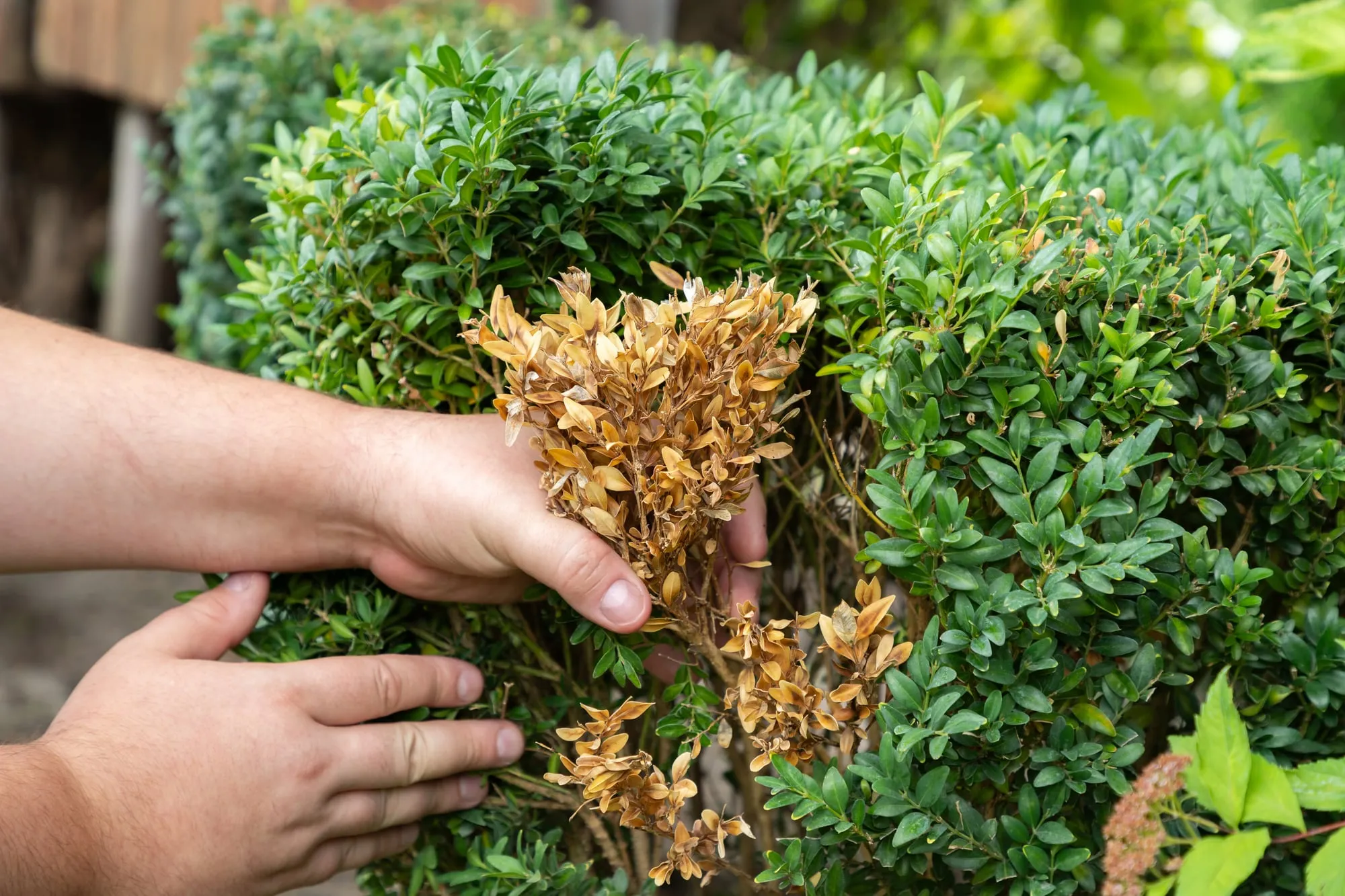
East End hedges fail one plant at a time. A Southampton privet can be deer-tipped on the road side, salt-burned on the ocean side, and carrying scale in the interior. Treating the whole row as one sick hedge is how you miss the plant that still has a chance and waste chemistry on the one that is already a replacement.
Hampton Pest Management keeps plant-level notes on South Fork and North Fork properties. Guest weeks, rental turnovers, and irrigation that was set for July lawn color all change what a shrub needs in August. We want the species, the side of the building, and what changed before anyone asks for a yard-wide spray.
Why one label fails on Hamptons lots
Salt, wind, and deer do not hit every specimen the same. A hydrangea in a courtyard can be an irrigation skip while the street hedge is browse. Boxwood and rose do not share insects. If last week’s landscaper pruned hard before a party, that dieback is mechanical, not a disease we should tank-mix.
Photograph the worst plant and a healthy neighbor of the same kind. Note drip versus overhead, mulch volcanoes, and whether construction staged on the roots this spring. Second homes go dark for ten days. That drought shows up as leaf drop after you return, and it is not automatically an insect story.
What we record on the visit
Species, location, tissue, and timing. Sticky residue is not the same as leaf spots. Frass is not the same as winterburn that lingered. Irrigation clocks that still run lawn minutes onto shrub beds create a wet trunk collar on sandy East End soil. That is a water story first.
We will separate feeding, insect work, and replacement. One invoice line that says “shrubs” is how next season’s crew inherits a mystery. If a plant is in the deer path, repellent timing belongs in the file next to any horticultural work. Those are related, not identical.
Coordinate with lawn and pest calendars
A lawn overseed or a mosquito visit can conflict with ornamental applications and with reentry during guest weekends. Tell us the occupancy calendar. Southampton and East Hampton houses do not fail on a weekday schedule just because the crew prefers one.
Pruning, construction, and new lighting trenches all hit roots. If a contractor was on site, say so. We would rather wait and look again than treat a mechanical injury as a pathogen.
Closeout is a plant list, not a yard slogan
The file should name which plants were treated, which were diagnosed only, and which are replacements. Next visit we compare that list. If the same arborvitae is the only one failing, that is the job, not the whole hedge.
Call or use the contact page with town, photos of two different plants, and whether the house is occupied this week. The East End is one climate. Your hedge is still a set of individuals.
What a crew lead writes on the ticket
Plant, side of house, likely limiter, and whether we are treating, watching, or replacing. If deer are the limiter on the road hedge, that is not a scale ticket for the courtyard hydrangea. If salt is the limiter on the ocean side, chemistry will not invent a windbreak.
Southampton and East Hampton share a season. They do not share your irrigation clock or your deer path. Send both photos. We will keep them as two notes.