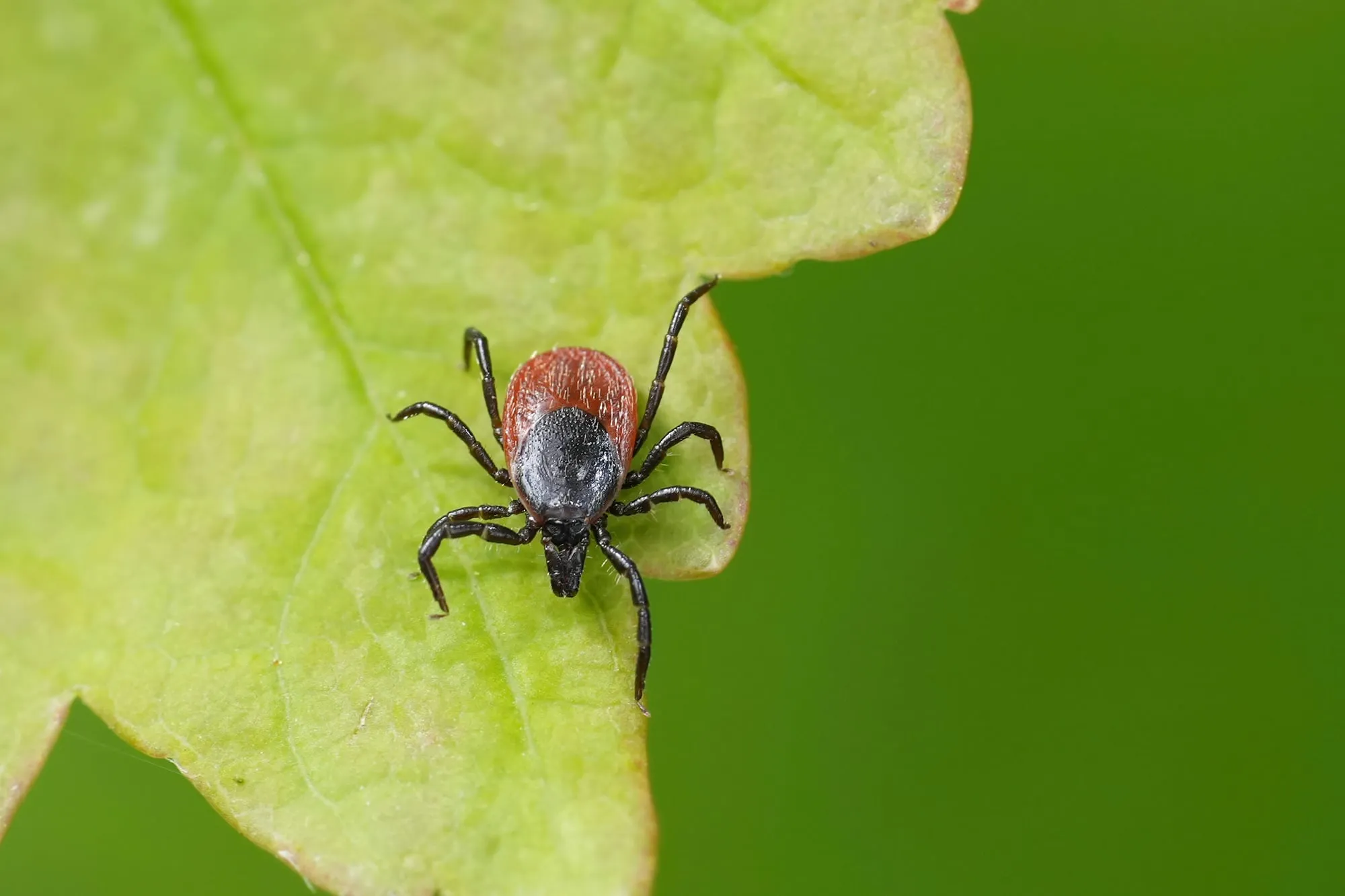
Many East End residents have a story that sounds the same: dozens of intensely itchy red bumps around the ankles, lower legs, waist, or other areas where clothing fits snugly. The usual explanation is chiggers. On Long Island, that explanation is almost always wrong.
Chiggers are not established on Long Island or elsewhere in New York State. What people are describing is far more often lone star tick larvae: tiny six-legged immature ticks that hatch in large numbers and attach in clusters. Understanding the difference helps you respond with the right prevention steps, not the wrong mental map of a southern pest.
What chiggers actually are (and why they are not here)
Chiggers are larval-stage mites in the Trombiculidae family. They are common in parts of the South, Southeast, and Midwest, where they feed on skin and leave small, intensely itchy bumps, often in tight-clothing areas.
Dr. Scott Campbell, who leads tick research for the Suffolk County Department of Health and has studied Long Island ticks since the early 1990s, has not documented chiggers in our region. If your bites appeared after time in local woods, lawn edges, or leaf litter, think ticks first, not chiggers.
Lone star ticks: the local explanation for “chigger” bites
The lone star tick (Amblyomma americanum) is well established across the eastern United States, including Suffolk County. Adult females carry a distinctive white spot on the back. The species has a two-year life cycle, and different life stages are active at different times of year.
In summer, eggs hatch into larvae sometimes called “seed ticks.” A single clutch can produce hundreds or thousands of larvae. They are roughly half a millimeter to one millimeter long, have six legs (nymphs and adults have eight), and often attach low on the body: ankles, legs, waist, and anywhere else skin was exposed near the ground.
Lone star ticks were first recorded in Montauk decades ago and have expanded steadily since the 1990s, helped by deer and other mammal hosts and likely aided by migratory birds. They are now a routine part of the tick picture on the South Fork and North Fork, alongside blacklegged (deer) ticks and American dog ticks.
How larval lone star bites differ from what people expect
Larval bites can look like a rash of small red bumps and itch severely, which is why the chigger label sticks. Unlike the microscopic chigger mite, tick larvae are visible if you look closely, especially before they engorge.
Lone star tick saliva can irritate the skin at the bite site. Redness alone does not prove infection. If a tick was attached for a longer period, watch the site the way you would any tick bite and contact your physician if you have concerns.
Alpha gal and other tick concerns (briefly)
Lone star ticks are associated with alpha-gal syndrome, sometimes called the red meat allergy, which can develop after exposure to tick saliva in sensitive individuals. Symptoms may include hives, digestive upset, or breathing difficulty after eating mammal products. Not everyone bitten will develop it, and the condition can improve over time if there is no further exposure, though recovery varies by person.
As with all ticks on Long Island, daily checks after outdoor time remain the most practical step you control directly. For broader yard and perimeter support, see our tick and mosquito control program.
Practical protection steps
- Do a full tick check every day after yard work, walks, or time in brushy areas. Larvae are easy to miss; use a mirror and check hairlines, waistbands, and sock lines.
- Wear long pants and tuck socks when working near woods, stone walls, or unmowed edges. Some people use an inner sock under the pant leg and an outer sock over it for extra barrier.
- Run outdoor clothing through a hot dryer for 45 to 60 minutes after coming inside.
- Keep pets out of beds if they roam tick habitat; they can carry ticks indoors.
- Manage the yard edge: mow, reduce leaf litter near play areas, and use wood-chip or gravel barriers between lawn and woods where practical.
- Consider treated clothing for high-exposure activities if your physician agrees it fits your situation.
- Work with a licensed pest management company for perimeter treatments in tick-favored areas when habitat on your lot supports heavy pressure.
When to call Hampton Pest Management
If your property backs up to woods, meadow, or dense hedgerow, or if family members are picking up ticks repeatedly despite personal precautions, professional habitat-focused treatment can reduce numbers at the edges where people and pets actually walk. We inspect the lot, identify tick-friendly zones, and align service with the Long Island season, typically April through November for combined tick and mosquito programs.
The bottom line
There are no chiggers on Long Island. Itchy clusters of bites after time outdoors are very often lone star tick larvae, not southern chigger mites. Daily tick checks, sensible clothing, yard-edge maintenance, and professional perimeter help when needed are the practical responses. For local context on other seasonal pests, browse our blog or contact us for a property evaluation.
Sources
- O’Reilly, Brendan J. (2020, September 3). Chiggers On Your Legs? Think Again. The Express News Group. https://www.27east.com/home-garden/chiggers-on-your-legs-nope-those-are-lone-star-tick-larvae-1720578/
- Krakowski, Andrew C. How Do You Prevent and Treat Chigger Bites? Scout Life. https://scoutlife.org/outdoors/wilderness-first-aid-qa/29247/how-do-you-treat-chigger-bites/
- James H. Diaz. Mandell, Douglas, and Bennett’s Principles and Practice of Infectious Diseases (Eighth Edition), 2015
- Centers for Disease Control and Prevention, National Center for Emerging and Zoonotic Infectious Diseases (NCEZID), Division of Vector-Borne Diseases (DVBD). https://www.cdc.gov/stari/disease/index.html